SnWebTech SMS Gateway

OTP SMS Service in India for User Verification

Use OTP SMS to confirm possession of a mobile number during sign-in, registration, password recovery and sensitive account actions. A reliable implementation also needs short validity, attempt limits and secure server-side verification.

Discuss Your RequirementView API Documentation
Secure OTP and verification SMS workflow

Build the message around a verified business event

A useful SMS begins with a clear reason to contact the recipient. The person may have created an account, placed an order, booked an appointment, enrolled in a service or agreed to receive relevant promotional communication. Define that relationship before selecting a route or writing a template. A purchased or loosely labelled database is not a substitute for accurate customer information.

Separate promotional communication from transactional, service and OTP workflows. They have different expectations, timing and compliance considerations. One message should normally have one purpose. Combining an operational alert with an unrelated offer can confuse recipients, complicate DLT template alignment and make campaign performance difficult to interpret.

Before launch, document the source system, event trigger, recipient field, sender or header, approved template, variable order and the team responsible for corrections. This creates an operational trail and reduces the risk of staff sending an urgent notice from an outdated spreadsheet.

Useful starting questions

  • Why should this recipient receive the message?
  • Which system owns the mobile number?
  • Is the message promotional, service, transactional or OTP?
  • Which approved DLT header and template apply?
  • What should happen after a failure or timeout?
  • Who reviews delivery and customer feedback?
Solution coverage

Capabilities and practical considerations

Each component below should be configured for the actual workflow rather than enabled as a generic promise.

01

Server-side generation

Generate unpredictable codes on the server, store them safely and never expose gateway credentials in the browser or mobile client.

Before production: test the exact content, longest expected variables, recipient selection and available status response with controlled numbers.

02

Short validity and attempt limits

Expire codes quickly, limit verification attempts and add rate controls to reduce abuse and repeated sends.

Before production: test the exact content, longest expected variables, recipient selection and available status response with controlled numbers.

03

Clear message context

Tell the recipient what the code is for, avoid unnecessary links and never ask the user to share the code.

Before production: test the exact content, longest expected variables, recipient selection and available status response with controlled numbers.

04

Operational monitoring

Track request responses and delivery states while avoiding sensitive code values in application logs.

Before production: test the exact content, longest expected variables, recipient selection and available status response with controlled numbers.

Implementation process for dependable messaging

Prepare DLT and content records

Commercial messaging in India commonly requires the principal entity, header and content template to be registered and aligned through a DLT platform. Treat the approved template as an implementation contract. Fixed wording, punctuation, brand text, variables and links should match what the sending application submits.

Protect the integration

Send API requests from a secured server-side component. Keep credentials outside public source code and browser JavaScript. Validate mobile-number format and business data before creating a request. Store an internal event reference and the provider message identifier, but do not log OTP values or unnecessary personal information.

Handle uncertain outcomes

An API timeout does not prove that a message failed. Blindly resending can create duplicate OTPs, order alerts or reminders. Design idempotency around the business event, check documented status information and retry only failures that are safe to retry.

Move from test to production gradually

Start with known recipients and a controlled volume. Test invalid numbers, long variables, multilingual content, network delay and downstream status handling. Confirm the customer-facing text with the responsible business team before expanding the audience.

Reporting should answer a business question

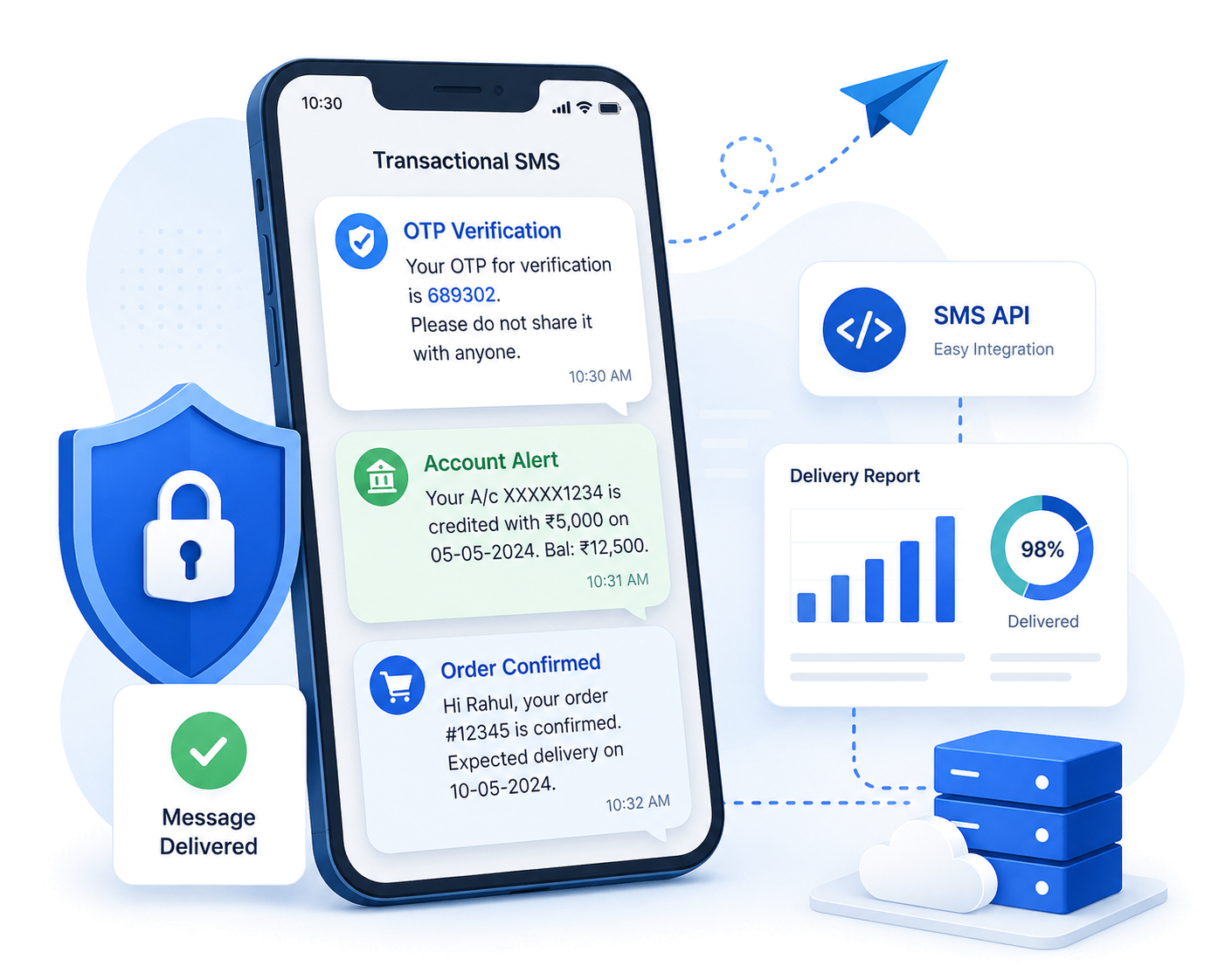
An accepted request means the platform has processed a submission; it is not necessarily the final delivery state. Record message identifiers and reconcile delivery information with the event in the CRM, commerce, booking or account system. Group recurring failures by invalid data, content or template mismatch, application errors and network outcomes.

Do not present an unverified permanent delivery percentage as a guarantee. Recipient data, device availability, route configuration, template alignment and network conditions affect results. A useful review explains what happened, which part of the workflow owns the correction and whether a retry is appropriate.

Pricing requires the complete context

Compare the route, expected monthly volume, credit validity, applicable taxes, DLT preparation and available support—not only a headline rate. Share the actual message purpose and frequency when requesting a quote. This helps avoid buying the wrong route or a volume that does not match the business need.

For promotional campaigns, also define the audience source and measurement plan. Delivery alone does not prove business value. Connect campaign references to the outcome tracked in your own system and avoid repeatedly contacting recipients who are not relevant to the offer.

Data, privacy and access safeguards

Limit gateway and contact-list access to authorised roles. Export only the fields required for a campaign and follow the organisation’s approved retention process. Staff should be able to explain why a recipient was selected, where the number came from and which team can correct it.

Keep sensitive financial, health, identity and academic information out of plain-text SMS where possible. Use a concise alert and direct the recipient to an authenticated application for complete information. Verify every link and avoid link-shortening or domains that recipients cannot recognise.

Measure relevance as well as delivery

Review whether the correct audience received the message at a useful time. Operational workflows may aim to reduce missed appointments or support calls; OTP workflows should monitor secure completion and abuse controls; promotional campaigns should be assessed against attributed conversions or qualified engagement.

Use Search Console and website analytics for landing-page performance, but use the messaging platform and business system for campaign operations. These tools answer different questions and should not be mixed into an unsupported ranking or delivery claim.

Frequently asked questions

OTP SMS delivers a one-time code to a mobile number so an application can verify a user or confirm an action.

No. Your application must securely compare the submitted code, enforce expiry and attempts, and mark the code as used after success.

Yes. Use the server-side SMS API with an approved template and implement rate limits, expiry and error handling in your application.

Discuss a practical messaging setup

Share the message purpose, audience source, expected volume and integration environment for a relevant conversation with SnWebTech Solution.

Contact SnWebTech